
 EN
EN  NL
NL  DE
DE Spring grass and horses: risks, laminitis and safe grazing
April 8, 2026
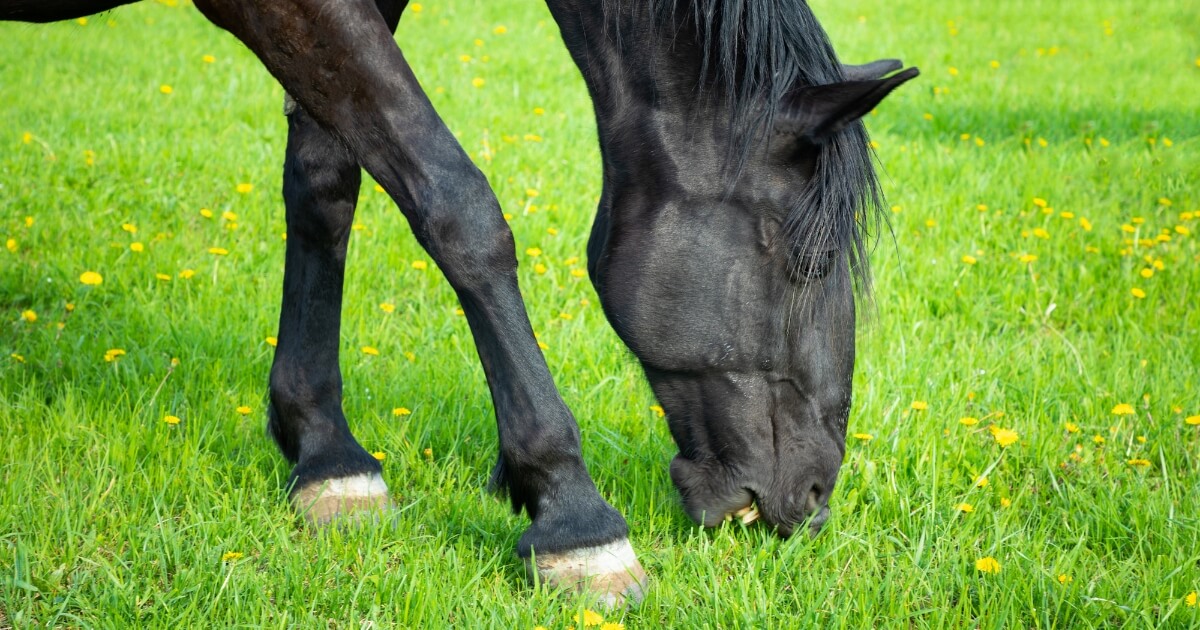
The first sunshine, longer days and a pasture turning green again. For many horse lovers, spring feels like a fresh start. Seeing your horse go outside again is enjoyment. But especially during this period, grazing requires extra attention. Because no matter how beautiful the grass looks: spring grass can have a significant impact on your horse's health.
Why spring grass is not always ‘innocent’
In spring, grass grows rapidly. In the process, under the influence of sunlight, it stores a lot of sugars (fructans). Especially after sunny days with cold nights, these levels can rise considerably. Your horse then gets a lot of sugars in a short period of time. And that is exactly where the risk lies.
Not every horse can handle that amount well. Consider:
- ponies and austere breeds
- overweight horses
- horses that have had previous health problems
Especially in this group, spring grass can cause problems more quickly.
Is spring grass dangerous for horses?
Yes, mainly because of the high sugar content (fructans). Especially in sensitive horses, this can lead to laminitis. Therefore, building up slowly is essential.
Osteoarthritis: a risk you need to take seriously
Too much sugar can lead to laminitis. A painful condition in which the hoof structure weakens. You want to get ahead of that. Not only because it is intense for your horse, but also because it can have long-term consequences. Good management in the spring makes all the difference in this.
Here's how to tackle grazing wisely
A horse doesn't have to stay indoors to stay healthy. But how you approach it does determine the difference.
A few practical points of interest:
- Build up grazing slowly
Start with short moments and expand step by step. - Keep a sharp eye on the weight
A few extra pounds seems little, but it does make a difference. - Know your horse
Some horses can have more than others. Austere breeds often need less than you think. - Consciously choose your grazing time
After sunny days with cold nights, sugar levels tend to be highest. - Limit intake where appropriate
For example, with a grazing mask or by reducing grazing time.
The overall picture: feed and grazing in balance
What your horse ingests in the pasture directly affects the total ration. And that's where things often go wrong. You can't see exactly what your horse is ingesting in terms of sugars and energy. As a result, you quickly feed too much without noticing.
This is precisely why it is important to:
- adjust concentrates to grazing conditions
- Looking critically at energy intake
- looking at the ration as a whole
Because only then will you really keep your horse balanced.
In doubt about your horse's ration?
Want to be sure you're in the right place? Then ask for a personal feeding advice to. Then together we look at your situation in the barn and pasture and tailor the ration exactly to that.
View the current fructan index in your area
The fructan index is compiled using current weather information. This makes it easy to see if there is a risk of high fructan levels, allowing you to adjust grazing time and duration. Read more about this on the website of PaardNatuurlijk.nl.
TERUG NAAR HET OVERZICHT